Our Focus
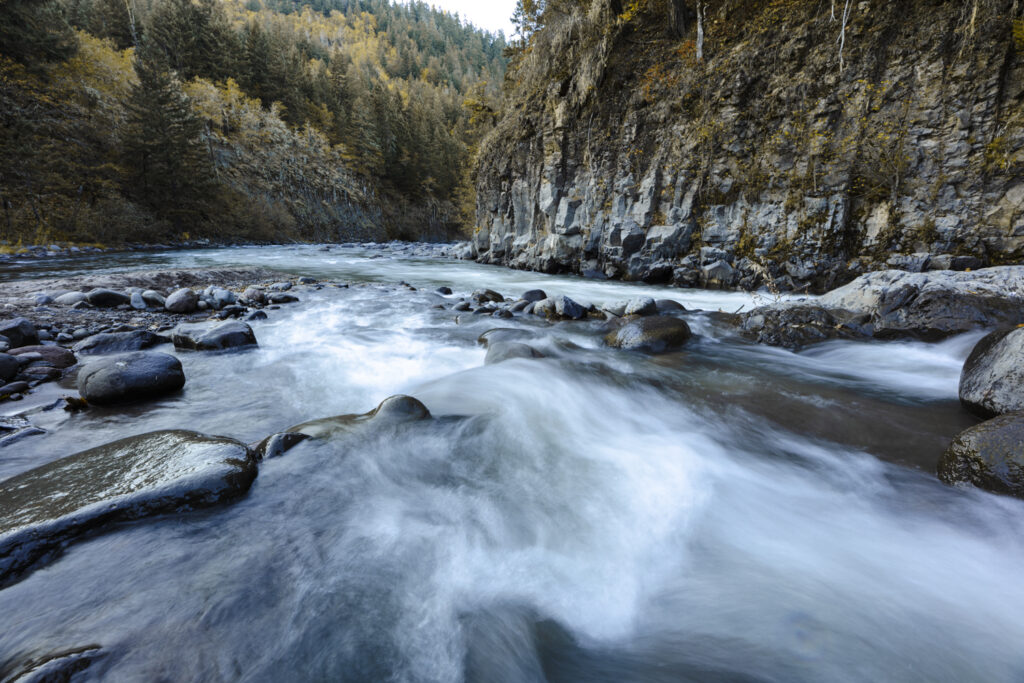
The Columbia River is iconic in the Pacific Northwest, cutting across political borders from present-day British Columbia to the Oregon Coast. Just a few hundred miles upstream from Mt. Hood, the Hanford Nuclear Site released radioactive material in the local environment. This site produced radioactive material used in the Trinity nuclear test and the bombing of Nagasaki. Today, it’s one of the largest and most complex environmental clean-up projects in the world. Our local story is intimately tied to a global story of the extensive human and environmental costs of war.
Our environmental peacebuilding grant-making works to intersect boundaries like the Columbia River. We think about the local and the global, work across sectors and silos, and in partnership with those who understand the many deep connections between peace, conflict, climate change, and the environment. Our environmental peacebuilding grants work to secure a more peaceful, just, and environmentally sustainable future.
Who We Support
- Environmental peacebuilding initiatives in the Pacific Northwest
We support local non-profit organizations engaging in environmental peacebuilding initiatives in deep partnership with Tribal Nations.
- The Environmental and Climate Costs of War and War Preparation
We support non-profit organizations engaged in research, policy, advocacy, or other efforts that elevate the harmful effects of war and war preparation on the environment and climate change. We are particularly interested in integrated approaches: for example, research initiatives with clearly articulated links to policy development or grassroots organizing.
- Strengthening the Field of Environmental Peacebuilding
We support initiatives that seek to improve mutual understanding and partnership among peace and environment organizations, communities, or movements. This includes activities like events or network support, travel support, or other organizational development activities.
What is Environmental Peacebuilding
Environmental peacebuilding means that we cannot build peace without considering the environment and climate. Also, we cannot address environmental issues or climate change without considering peace and security.
“As an overarching framework, environmental peacebuilding includes both the environmental dimensions of peacebuilding and the peace dimensions of sustainable development. It also considers an array of environmental issues that range from managing specific natural resources to protecting the global climate and oceans. By doing so, environmental peacebuilding comprises efforts to prevent environment-related conflicts, to build trust and establish shared identities, to facilitate interaction between conflict parties, and to build both negative peace (e.g. by addressing conflict resources and other measures to end conflict) and positive peace (e.g. by creating a context for cooperation and integration, making conflict unthinkable).”
Excerpt from Towards a Definition of Environmental Peacebuilding by Carl Bruch, Erika Weinthal, McKenzie Johnson, & Tobias Ide
Peace Science Digest on Environmental Peacebuilding
Special Issue of our War Prevention Initiative’s Peace Science Digest to inspire new thought, conversations, and practices in environmental peacebuilding responses to an awareness of power dynamics and invigorated by Indigenous knowledge and experiences.
The Future of Environmental Peacebuilding: Nurturing an Ecosystem for Peace
This ECCP white paper on the future of environmental peacebuilding draws on 18 months of research and consultation with practitioners, researchers, and policymakers from all regions.
Partnerships
We build and maintain quality relationships with our grantee partners that share our values and do the hard work. Our successes can only be measured through how well we are able to support them.